Unexpected Guests for Bocci
Design of custom borosilicate glass objects for Bocci's installations.
text: Johannes Schon
ph: Yago Castromil, Paola Pansini, Ivan Grianti
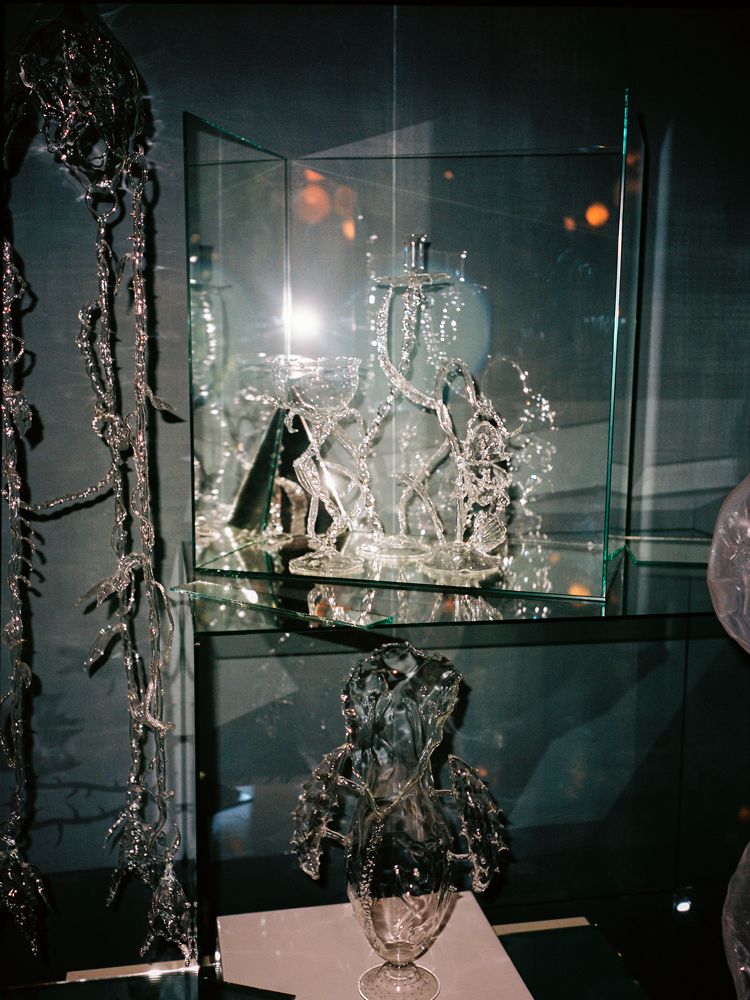
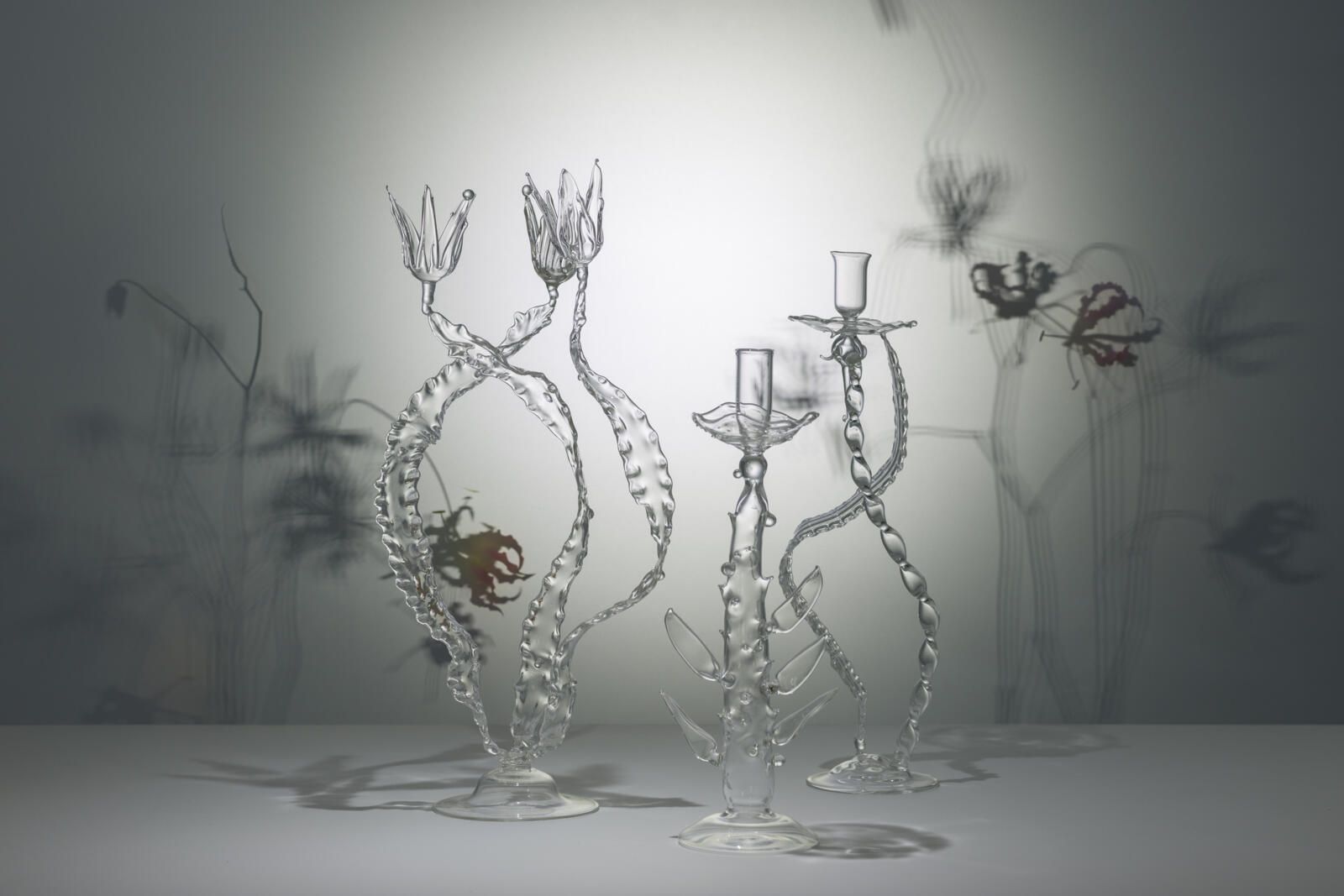
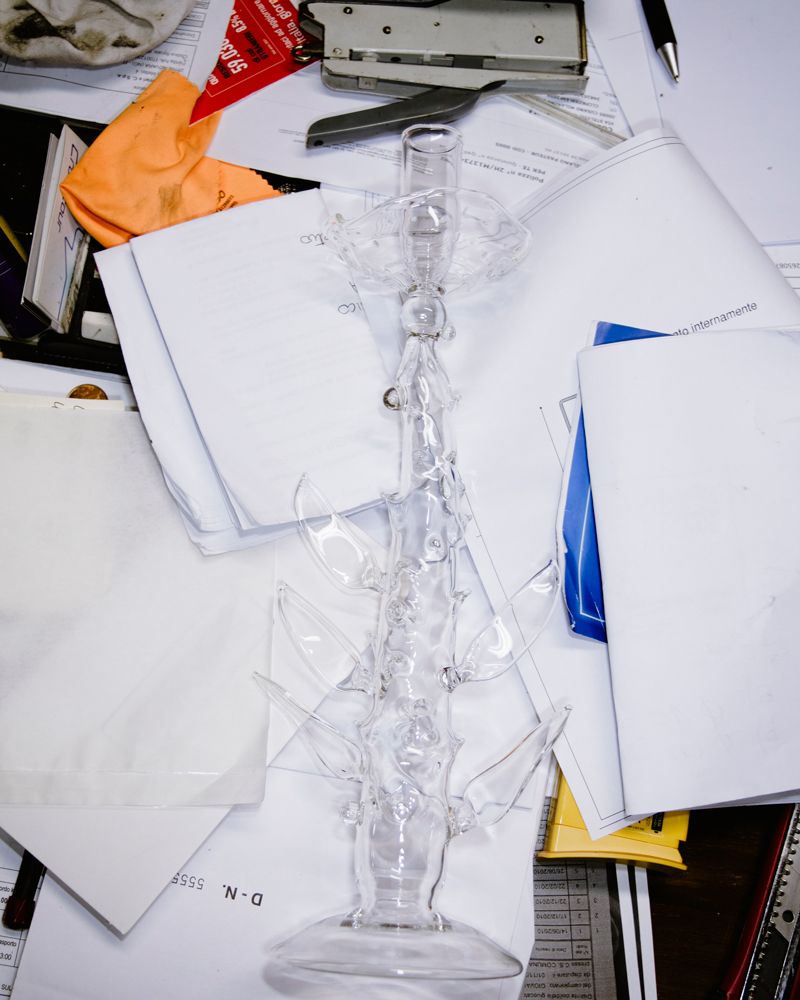
Unexpected Guests is a commission comprising various objects conceived as a single body of work. Rather than functioning as isolated pieces, the objects operate as a loose constellation, a group of presences that appear to have been extracted from a larger, unseen environment and temporarily brought into relation with one another.
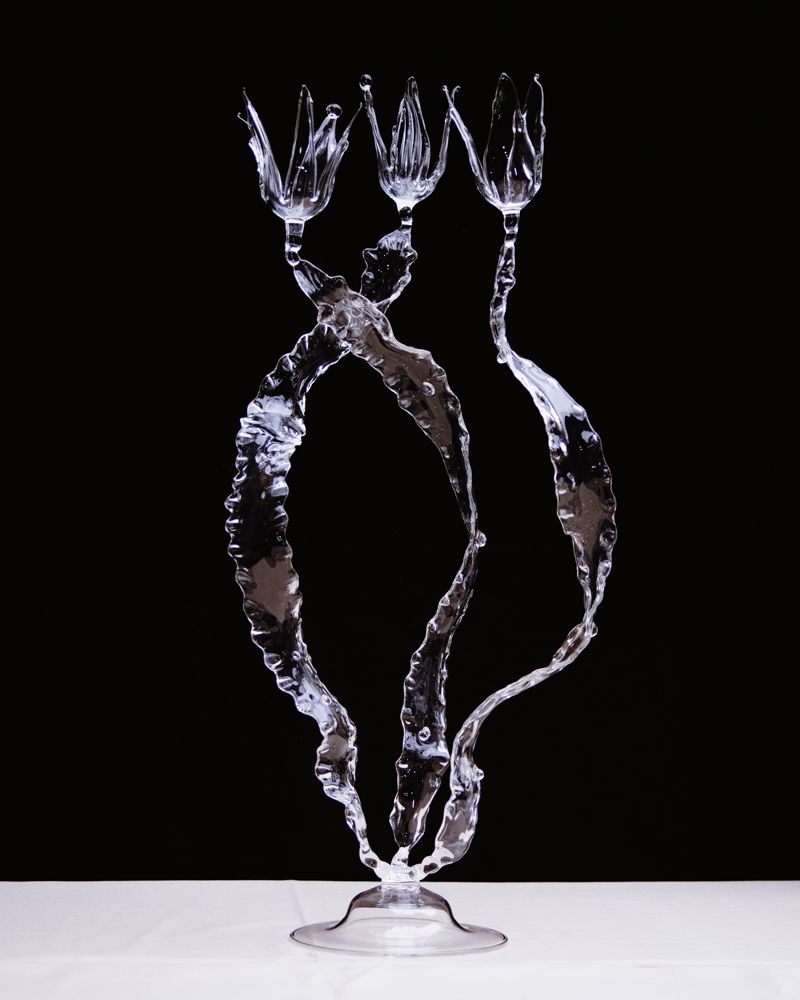
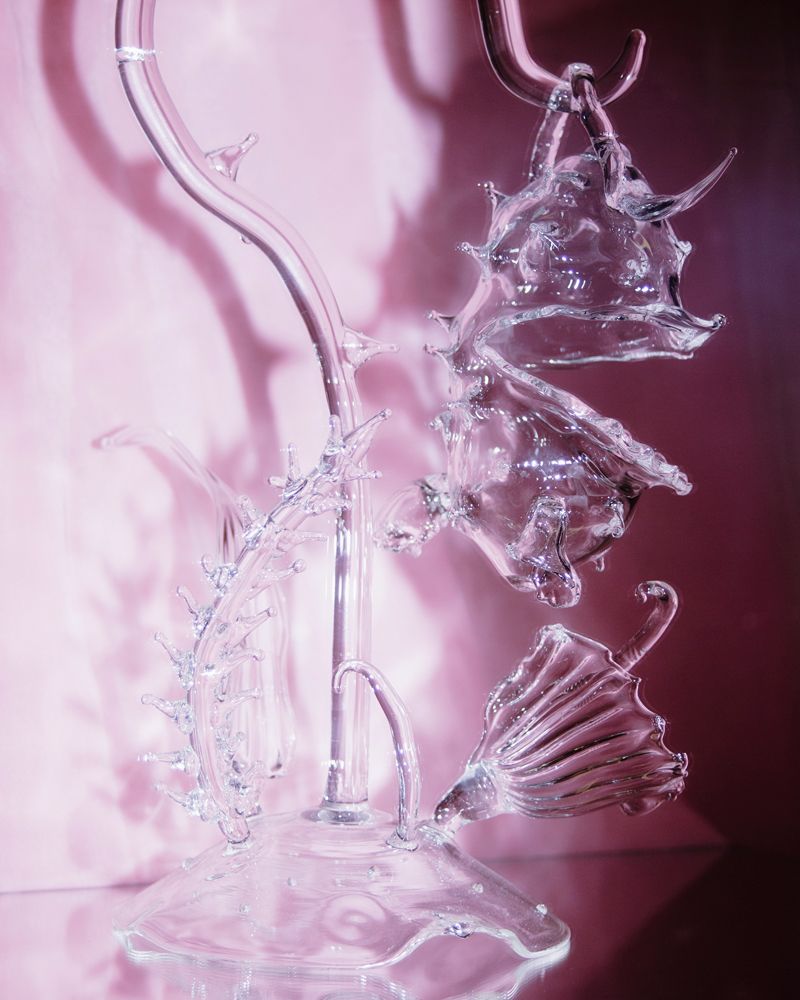
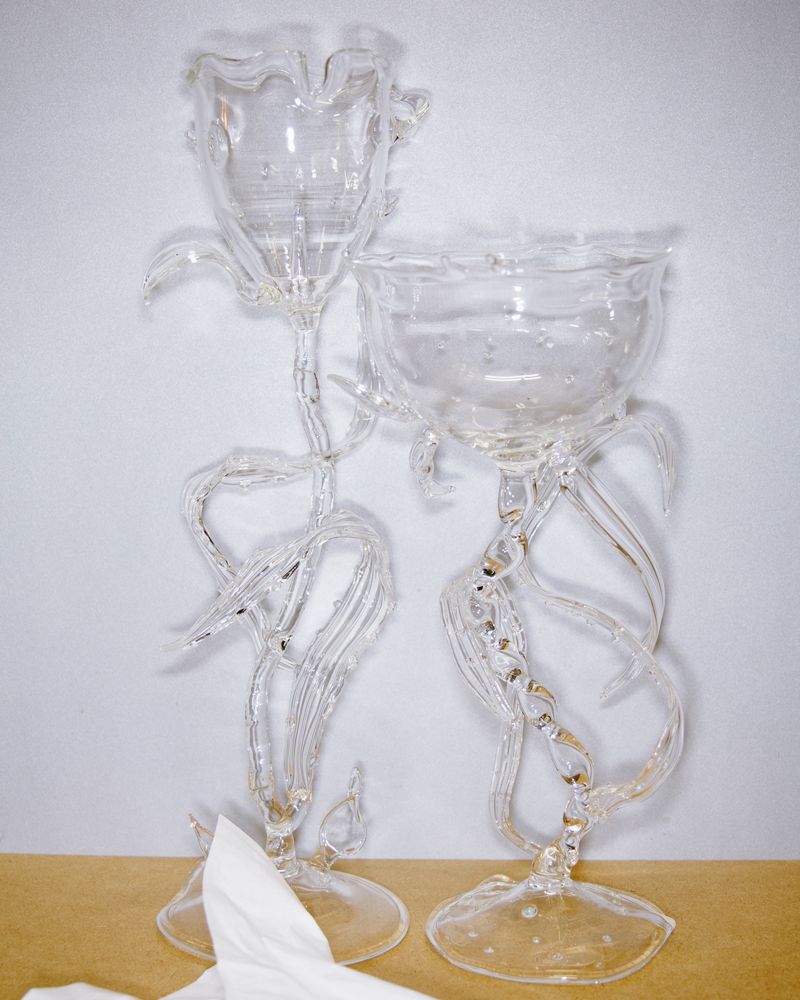
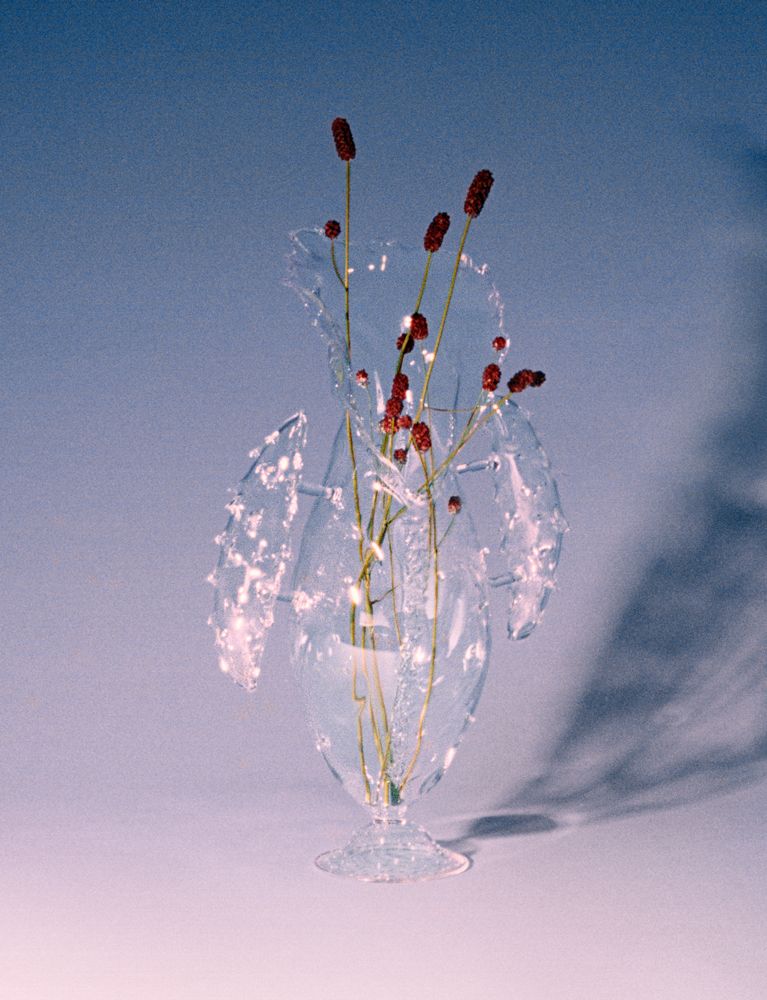
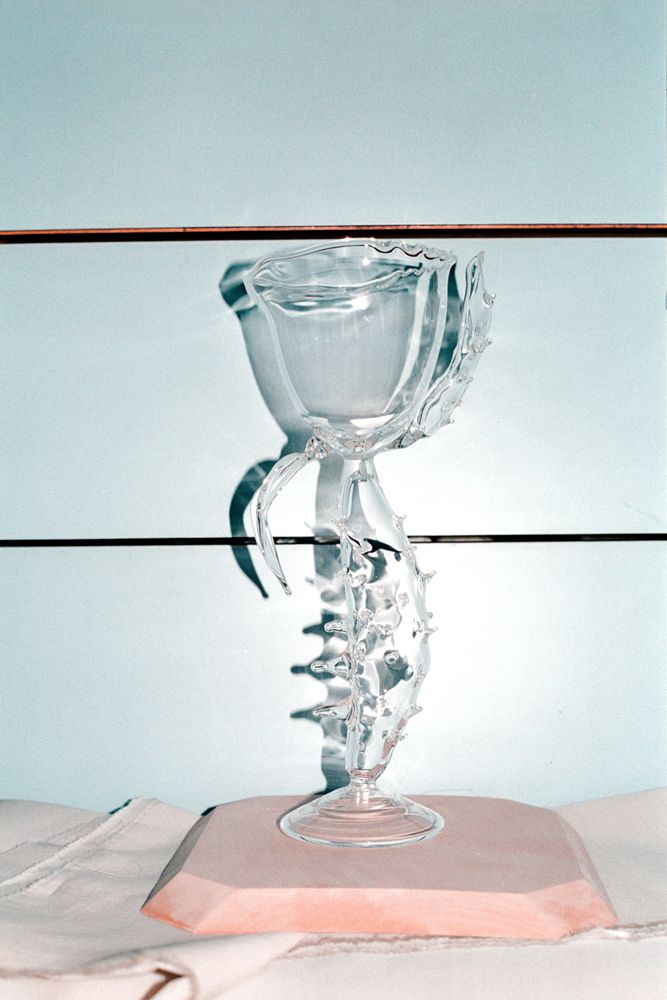
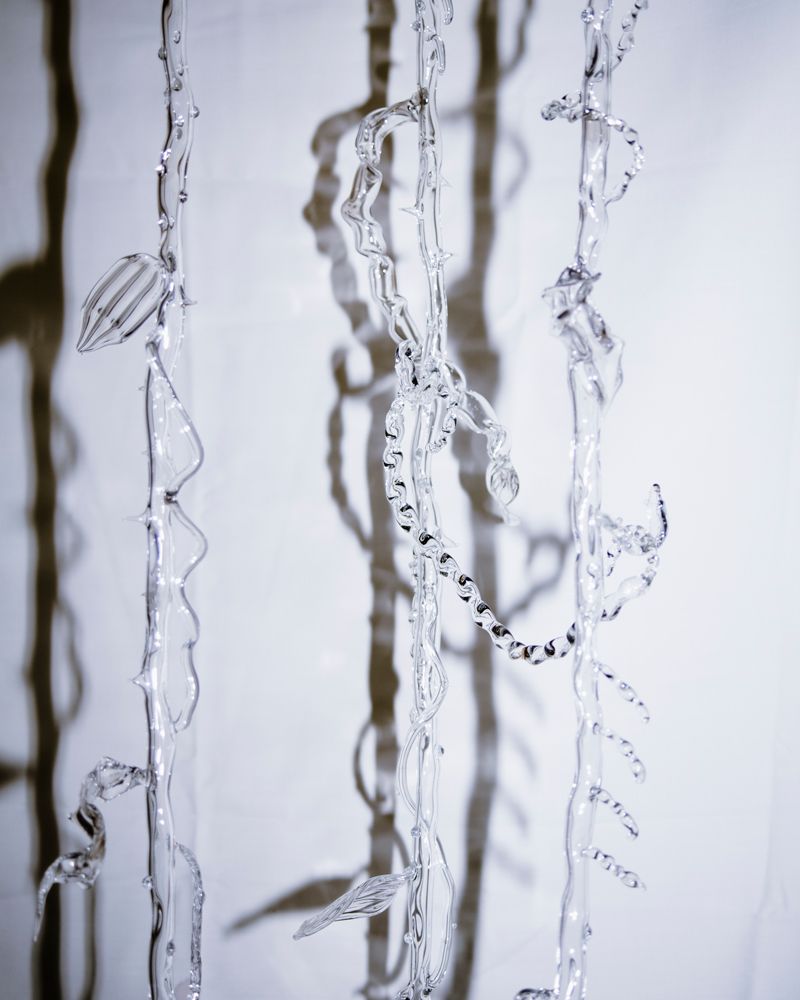
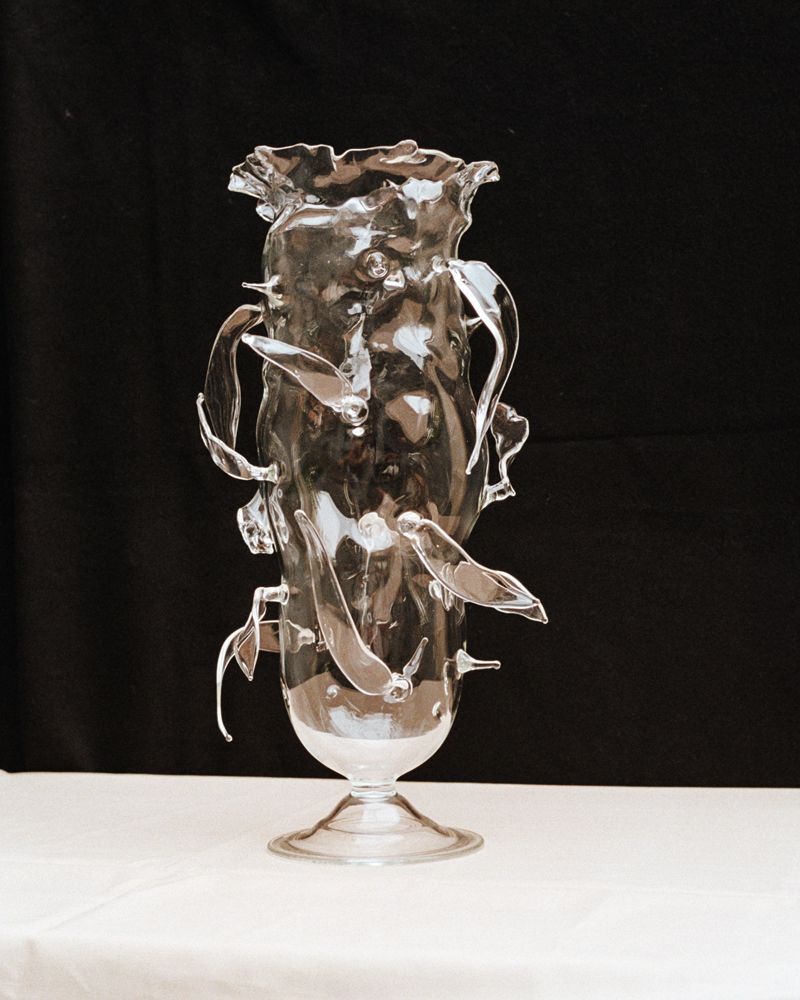
The twelve glass objects share a common language but resist uniformity. Each form carries its own internal logic, yet together they suggest a system that is partial, unstable, and unresolved. They read less as finished artifacts and more as specimens, things held in suspension, caught between emergence and attention. What connects them is not order or hierarchy, size or scale, but condition but a sense of having been removed, paused, and made visible.
Glass is central to this condition. Cameranesi works with glass for its contradictions. It is transparent yet reflective, seductive yet dangerous, precise yet unpredictable. In these objects, glass behaves less like a surface and more like a membrane. It reveals interiors while distorting them, bends light while interrupting vision, and shifts constantly between delicacy and threat. The material never settles; it remains active, unstable, and charged.
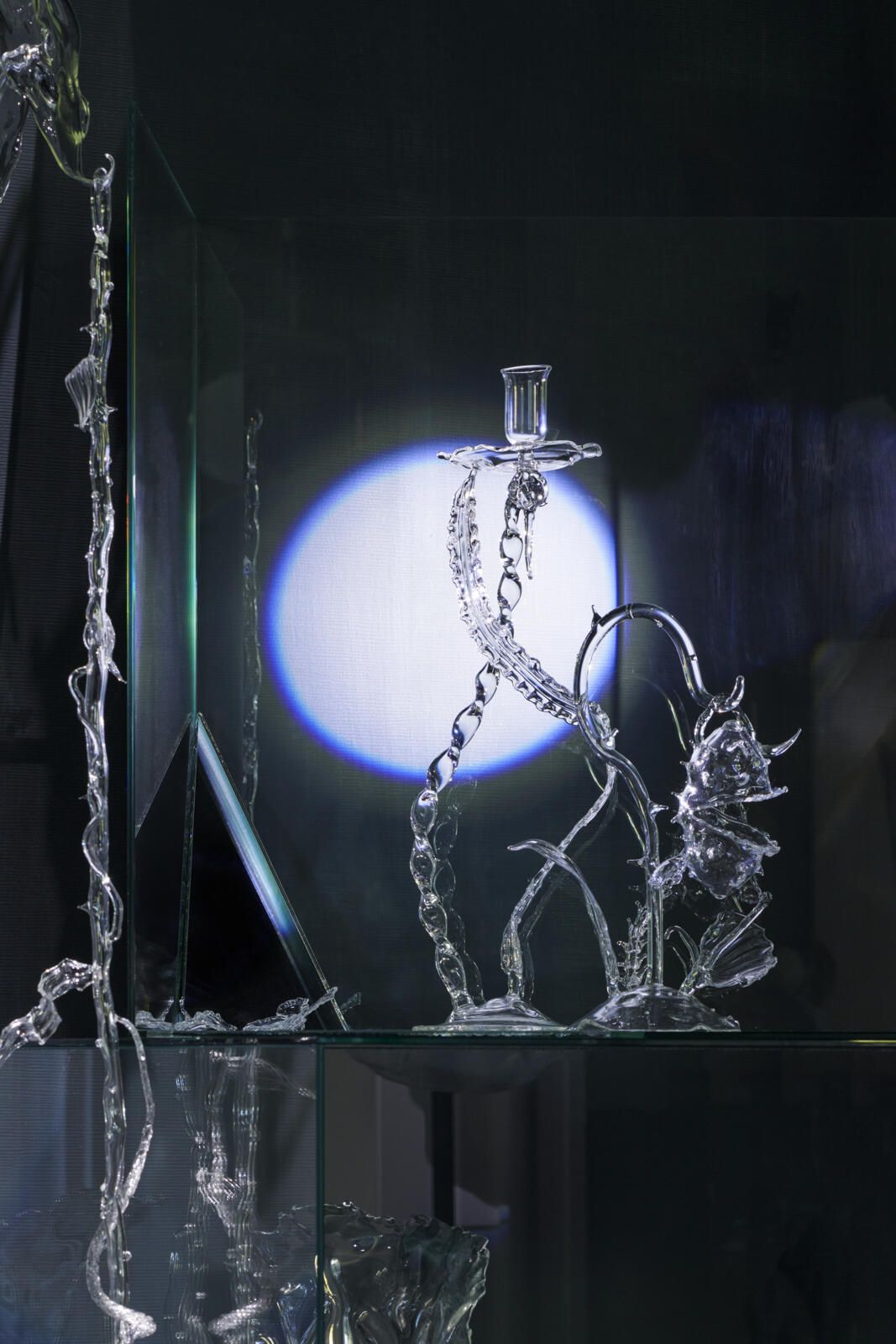
Formally, the objects draw from a vocabulary of marine organisms, worms, tentacles, and vegetal growths. These references are never literal. They appear as traces or echoes, a curve that recalls a tendril, an internal filament that suggests something parasitic or floral, a structure that feels biological without belonging to any known species. The objects sit between what feels recognizable and what drifts into something disturbingly speculative.
This tension is deliberate. Cameranesi is drawn to forms that are compelling but uneasy, elegant but slightly wrong. A glass object may initially read as familiar or decorative, only to reveal sharpness, intrusion, or irregular growth on closer inspection. What is usually kept separate - the beautiful and the grotesque, the ornamental and the unsettling - is allowed to coexist within a single form.
The idea of the specimen is central. These objects feel as though they belong to a broader ecosystem that remains absent. They suggest fragments of a world that cannot be fully reconstructed. They are not presented as answers, but as things that ask to be looked at longer, to be considered without being resolved.
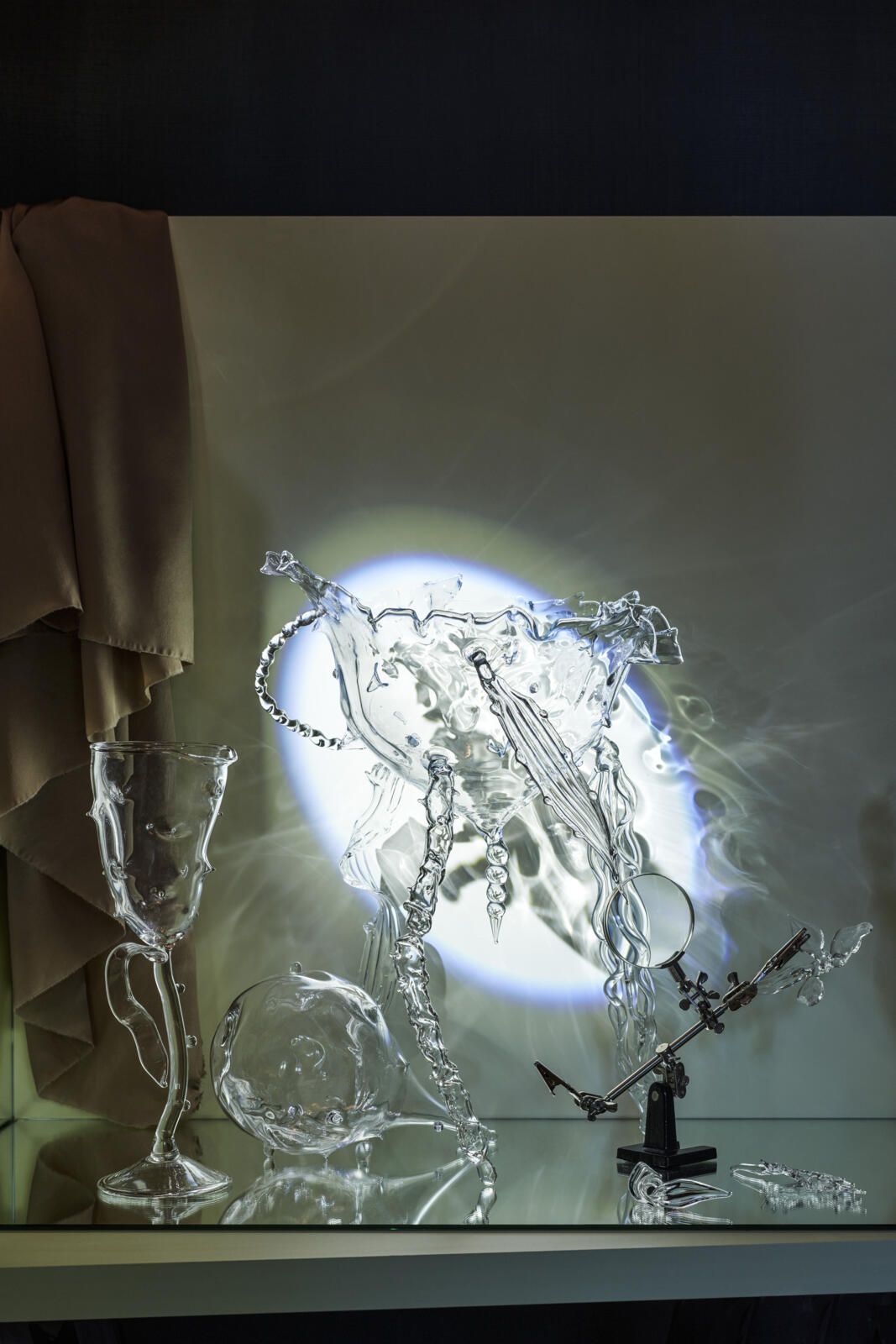
The groupings take shape as fragments of a sort of alien laboratory, a reduced field of specimens where certainty has slipped. The objects appear removed from a larger, unseen environment and held in a state of suspension. They feel temporarily paused as if caught mid-observation. What remains is a quiet tension between presence and absence, recognition and unease.
A literary image that resonates strongly with this condition appears in Bram Stoker’s Dracula. During Jonathan Harker’s stay at the castle, a small detail unsettles him: “The glass was empty, but the Count kept his eyes fixed on it.” The moment is quiet but charged. An object designed to hold something instead presents only absence, yet it demands prolonged attention. Meaning gathers not through what is shown, but through what fails to appear.
Cameranesi’s glass objects operate in a similar register. They do not fulfill the expectations attached to their forms. Instead, they hold space rather than function, suggestion rather than explanation. Like Stoker’s empty glass, they draw the viewer into a heightened awareness of lack, asking attention to linger where resolution never arrives.
Rather than telling a story, the twelve glass objects suggest that something has already taken place. They feel like traces without context, remnants that resist narrative closure. Meaning is assembled through proximity, repetition, and time spent looking, rather than through explanation. What emerges is not a single reading, but a sustained encounter with presence shaped by absence.
Unexpected Guests is not a collection in the traditional sense, but a constructed condition. The works act as strange inhabitants rather than standalone pieces. They do not seek explanation or classification. They insist instead on presence, on being encountered as unfamiliar, unresolved forms.