“I Racconti” Jacqueline Sullivan Gallery NY
Interview by Erik Benjamin
ph: Adrianna Glaviano, Sophia Hearst, Matthieu Lavanchy
EB: The three suites of new work for I Racconti take material departures from your borosilicate pieces. I’d love to learn about what you’ll be showing.
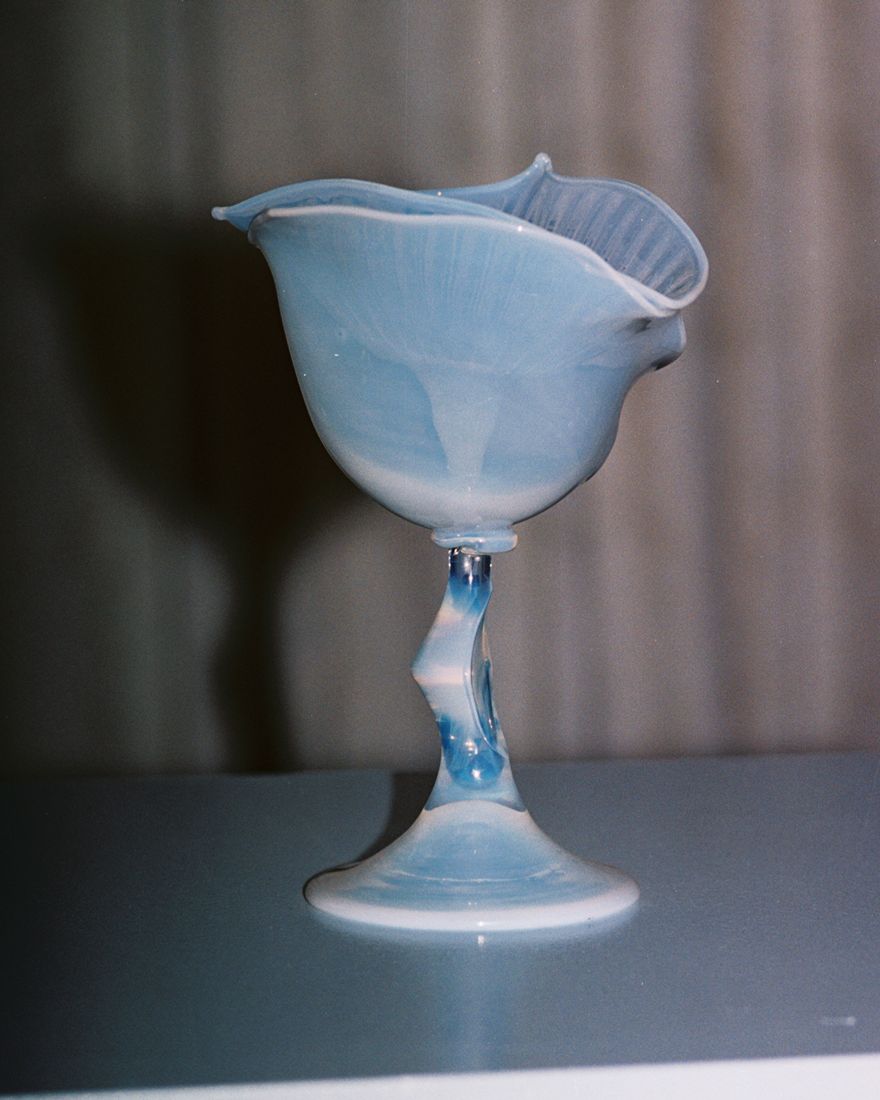
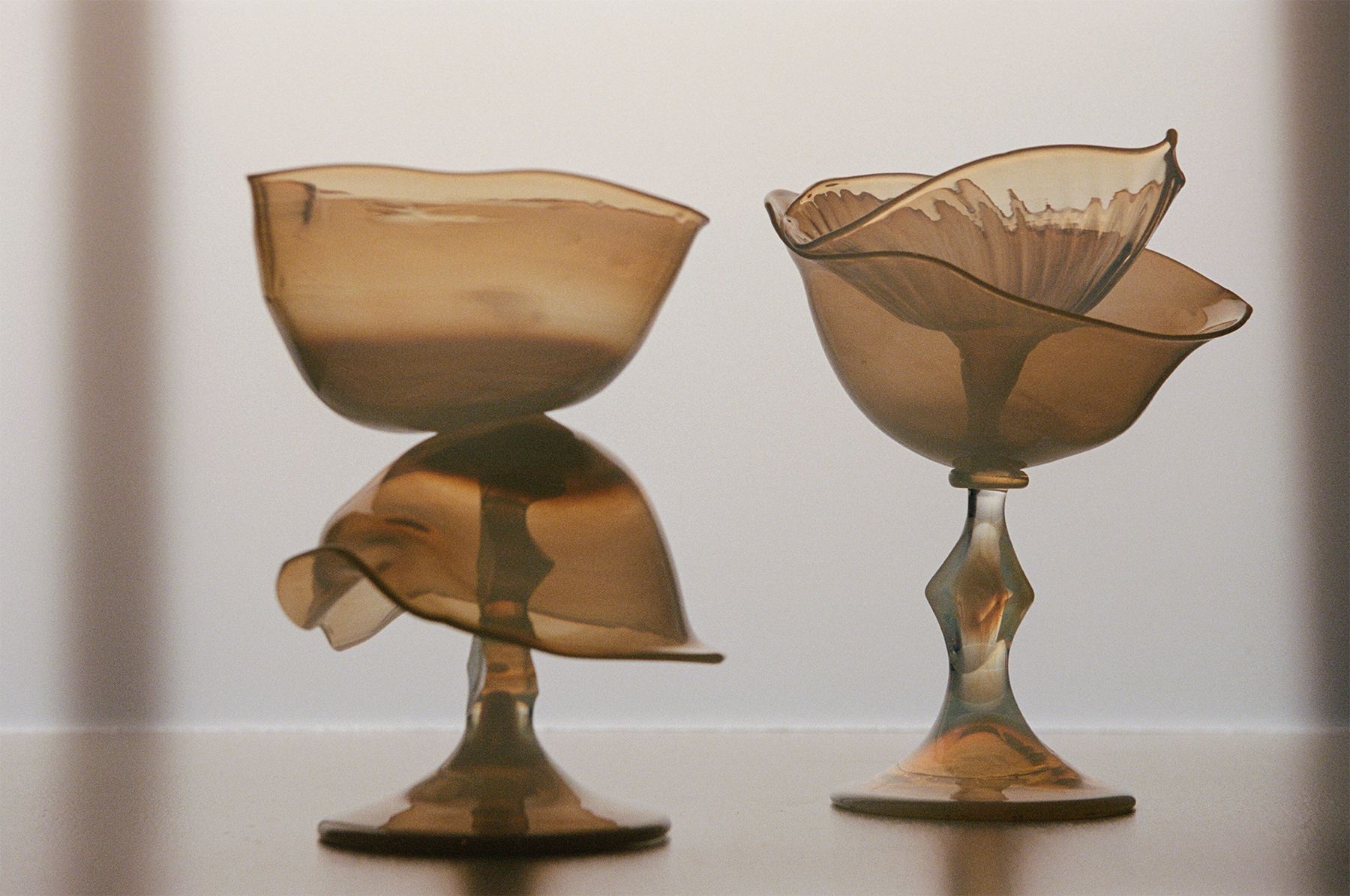
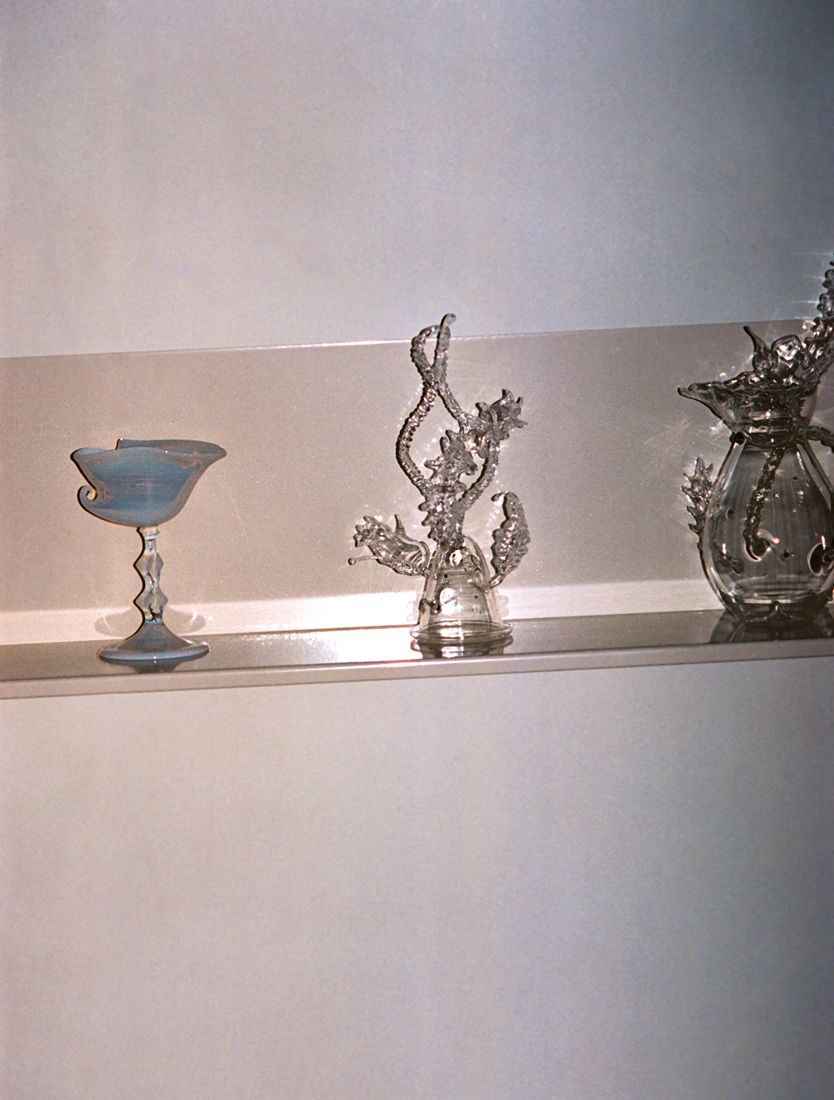
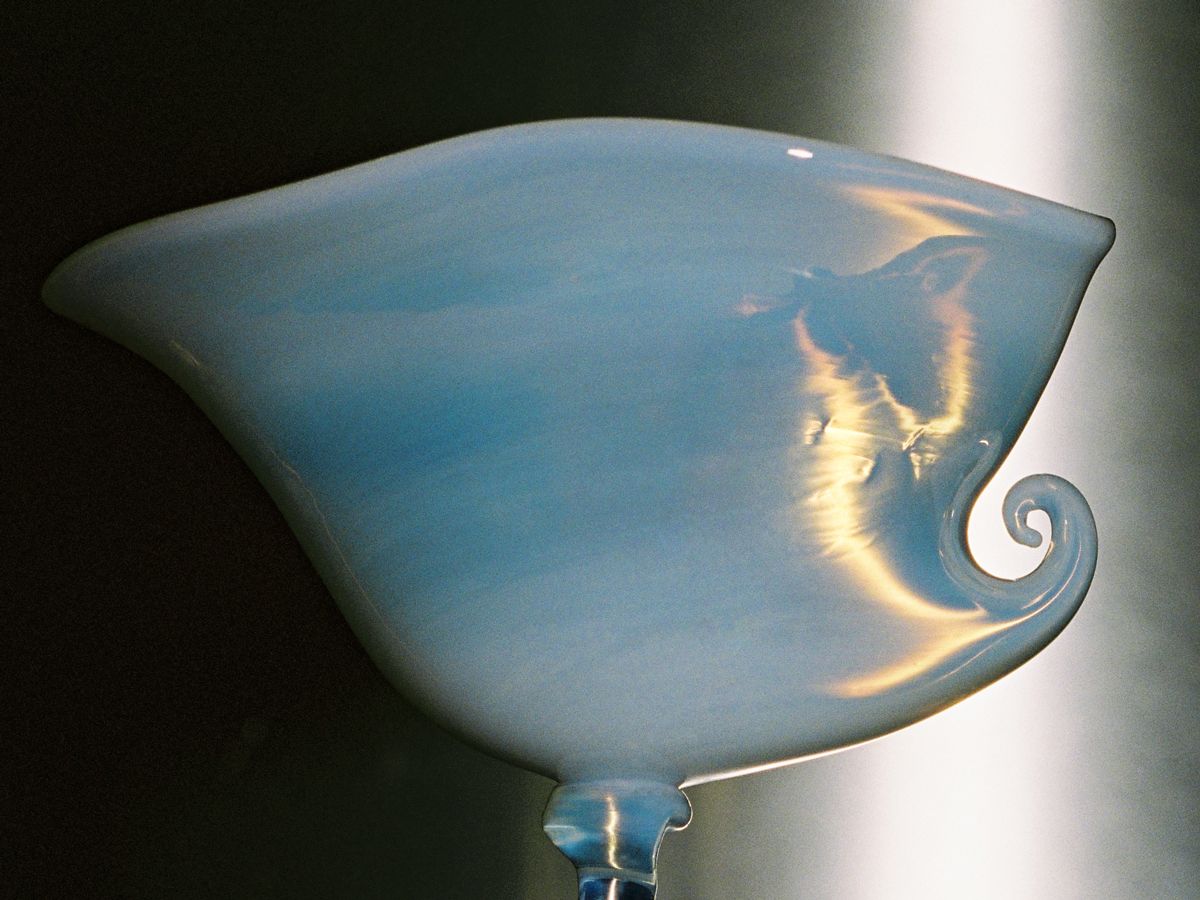
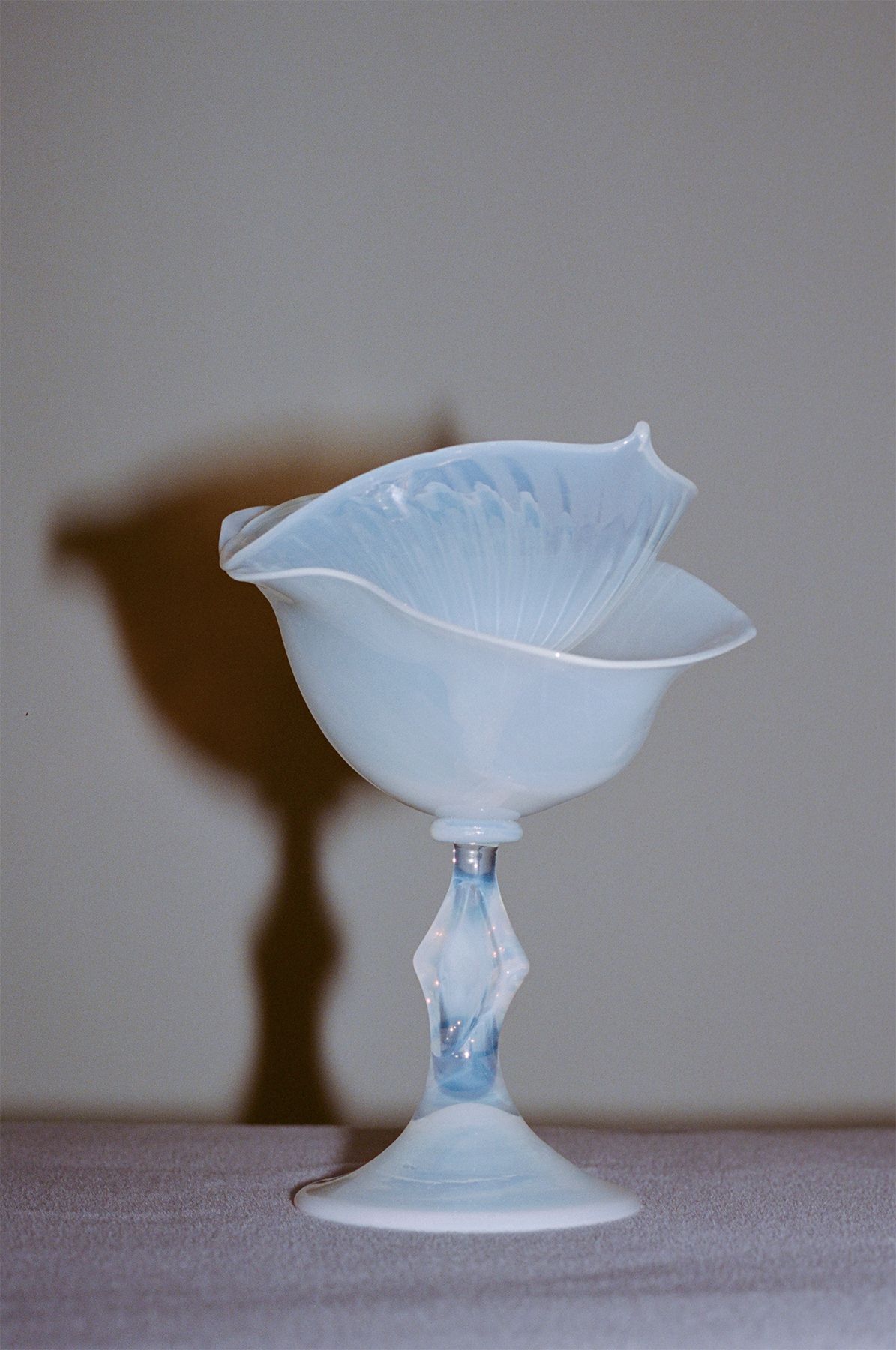
VC: My idea for these glasses was to try to incorporate something very classic. Something that would also feel like a sense of evolution, but also decay. I was also quite fascinated by some glass from the Italian Renaissance, which I found a bit lumpy and unstable, even a bit goofy. I wasn’t interested in making something imperfect and ugly, but rather, I was happy to accept the fact that this part of the design process would produce a result that was somewhat out of my control. The champagne glasses are made in two parts, the stem and the cup. The stem is made purposefully thick, which allows for cutting. I love how it evokes a bone-like shape. The technique itself is a speciality of the Czech Republic and also something that is difficult to do in Italian workshops. If you take them in your hand, they have a sharpness that I love. There are two pieces in this collection that take inspiration from flowers that are subjected to radioactivity. They start to grow in unexpected ways and can become quite repulsive, but also beautiful. To have a champagne glass with one cup growing inside another feels a bit alien. Like an experiment that’s both scientific and unexpected. I want to take them to a level where they’re meaningful for us in ways that feel quite uncanny. I always refer to movies, so these would fit in a science fiction one about a future with aliens that are drinking champagne. Or maybe a black and white movie from the ‘40s. I like this idea of continually referencing the prop and production design elements.
EB: What about the wooden and copper boxes?
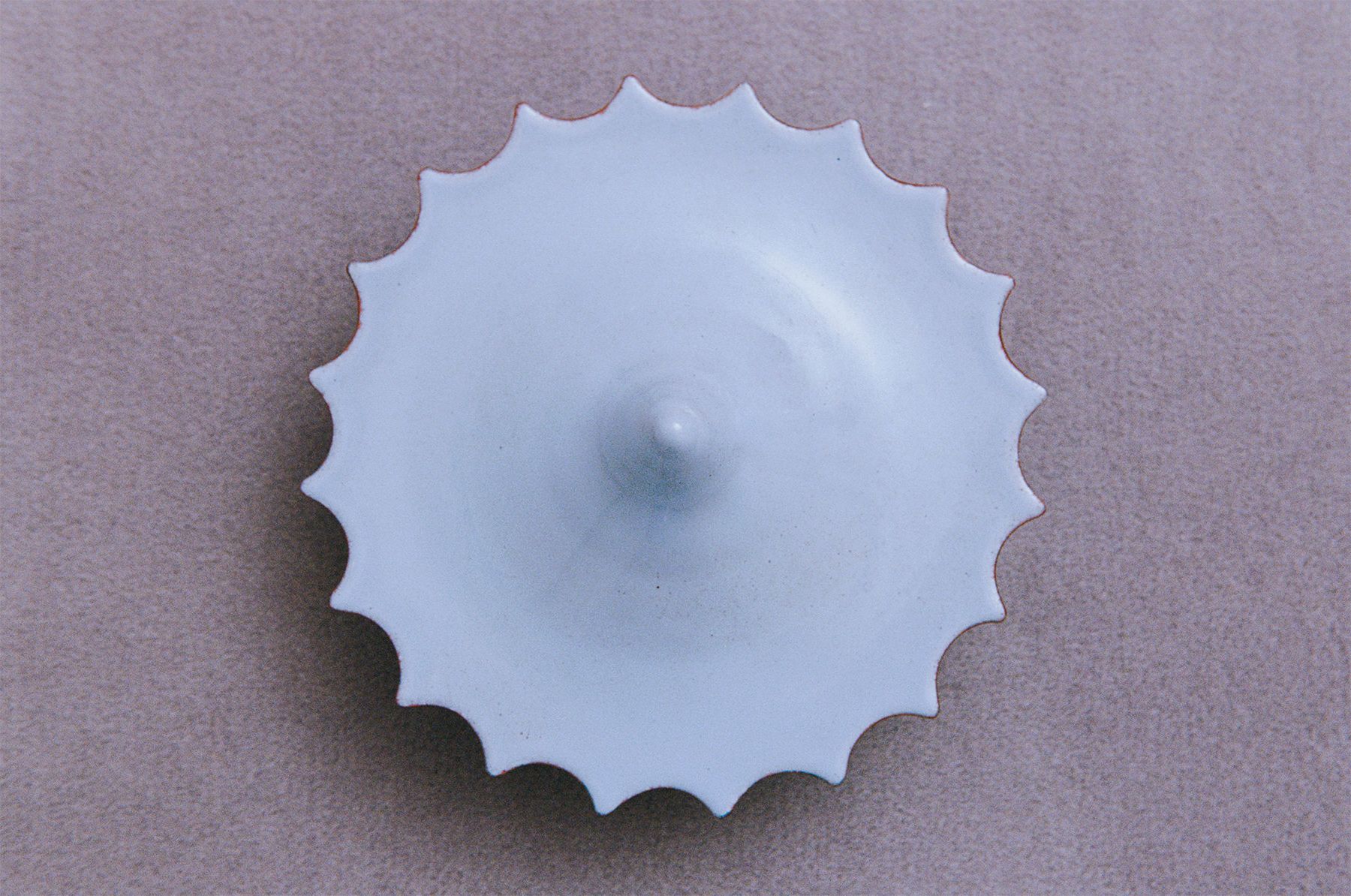
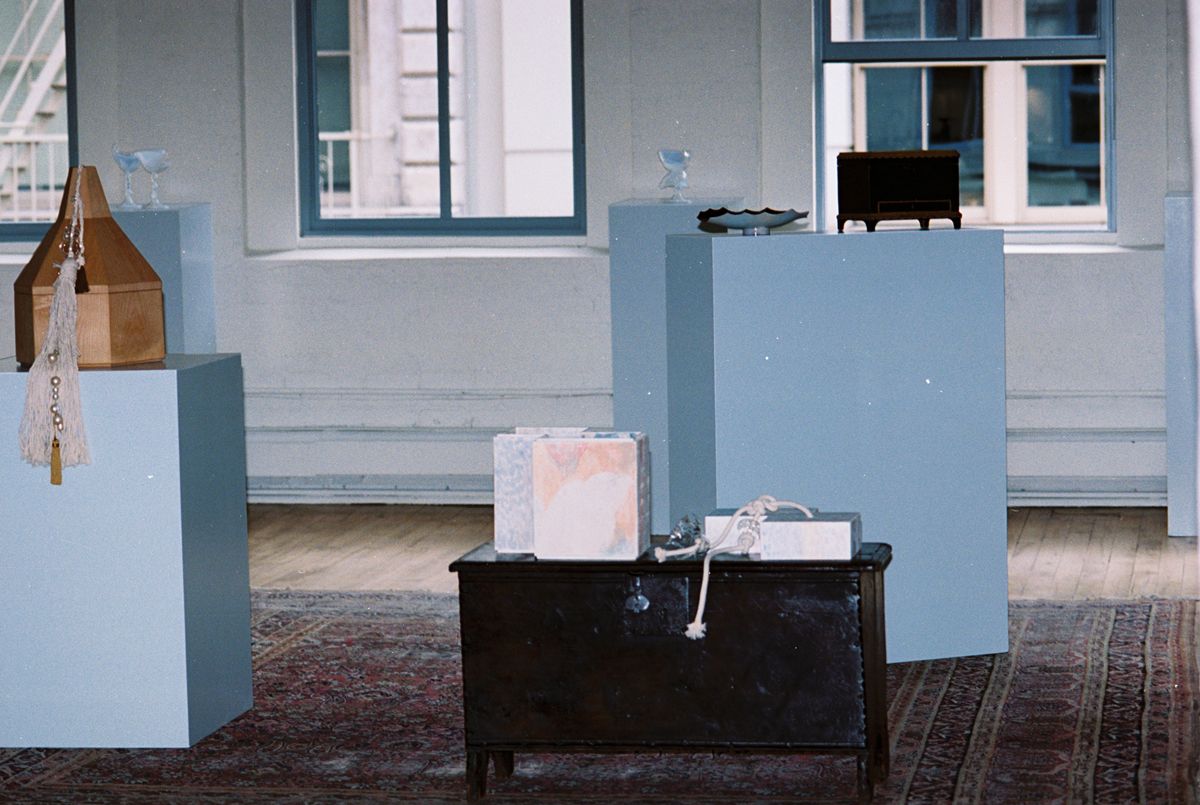
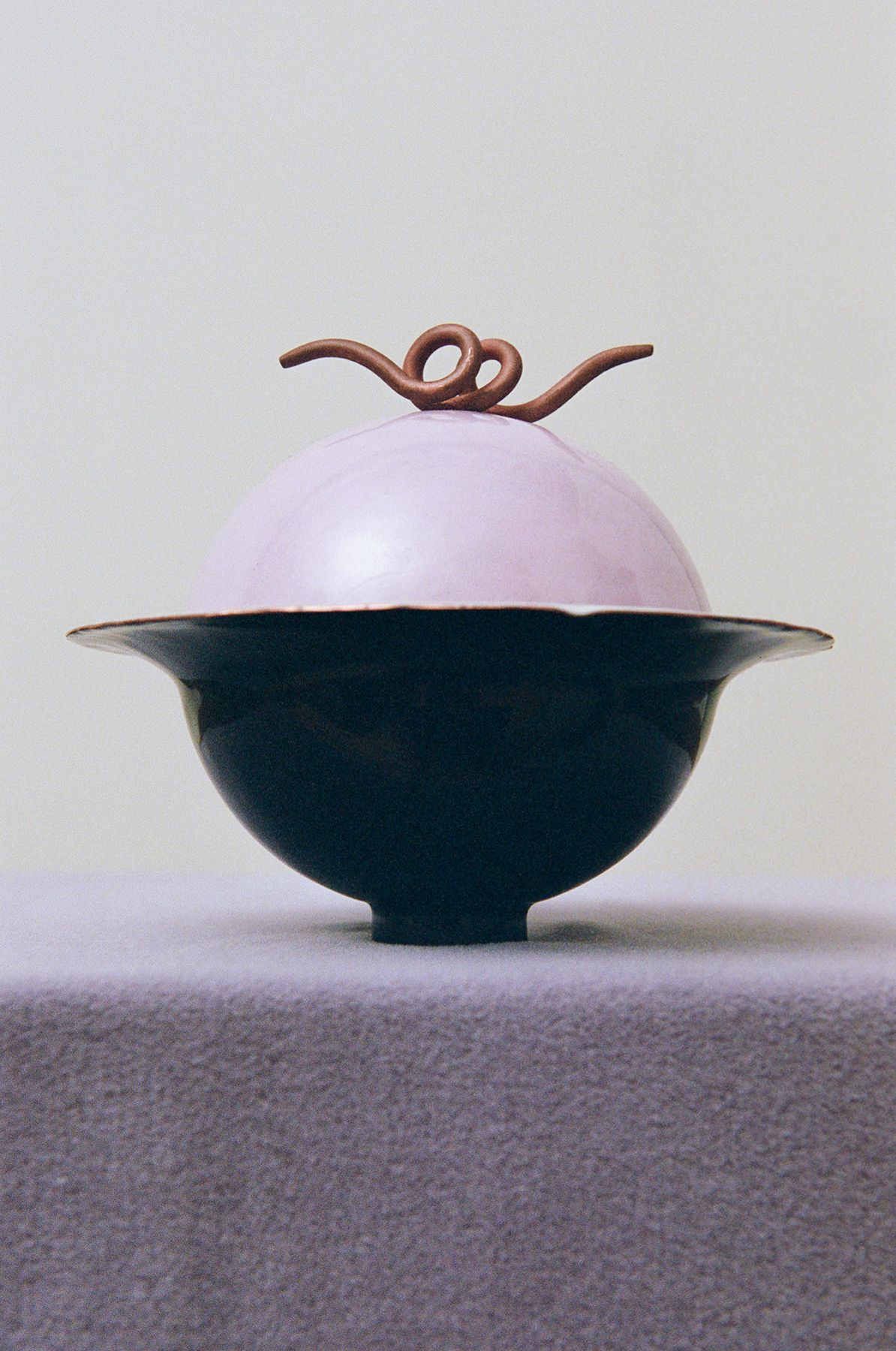
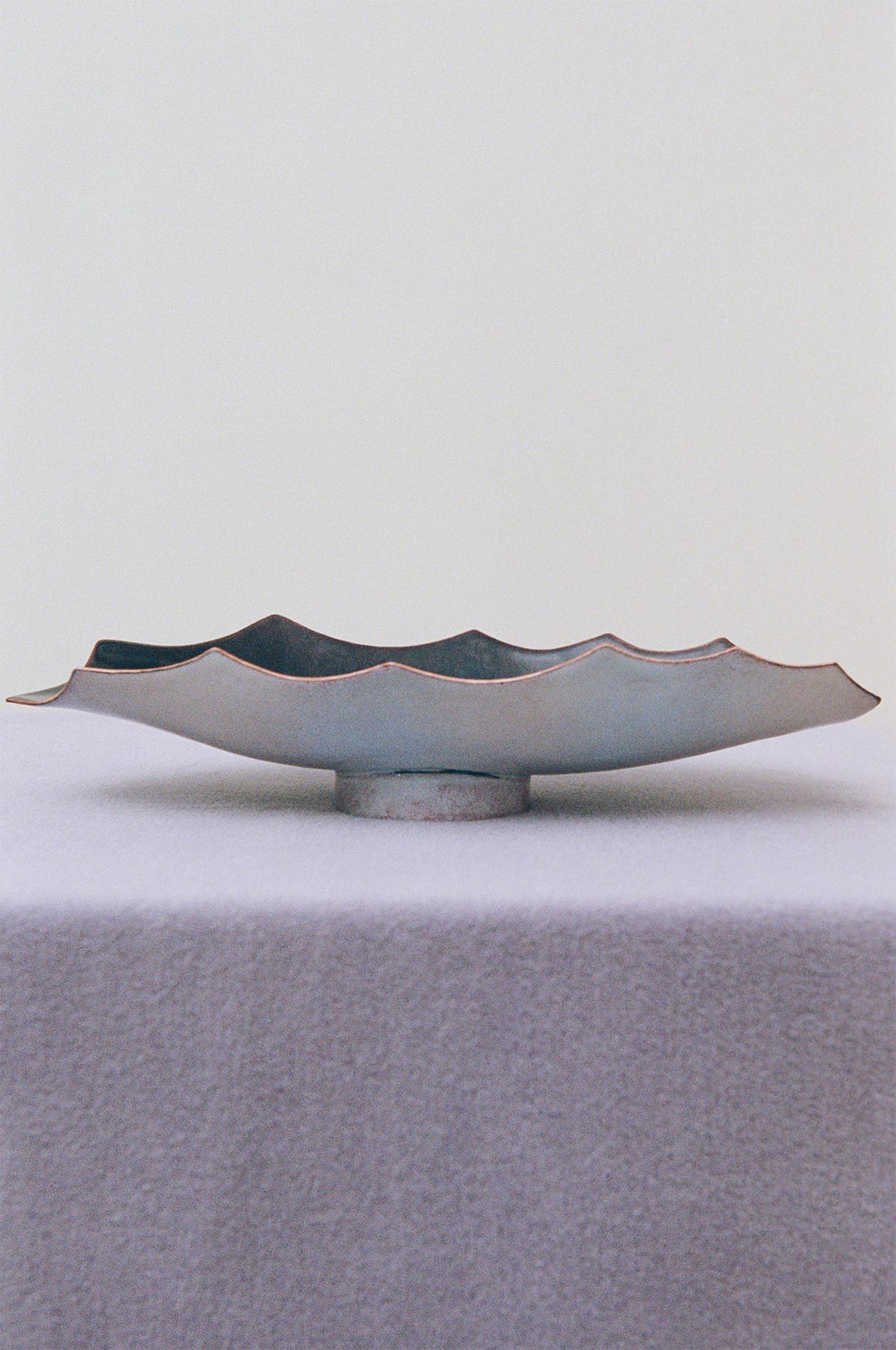
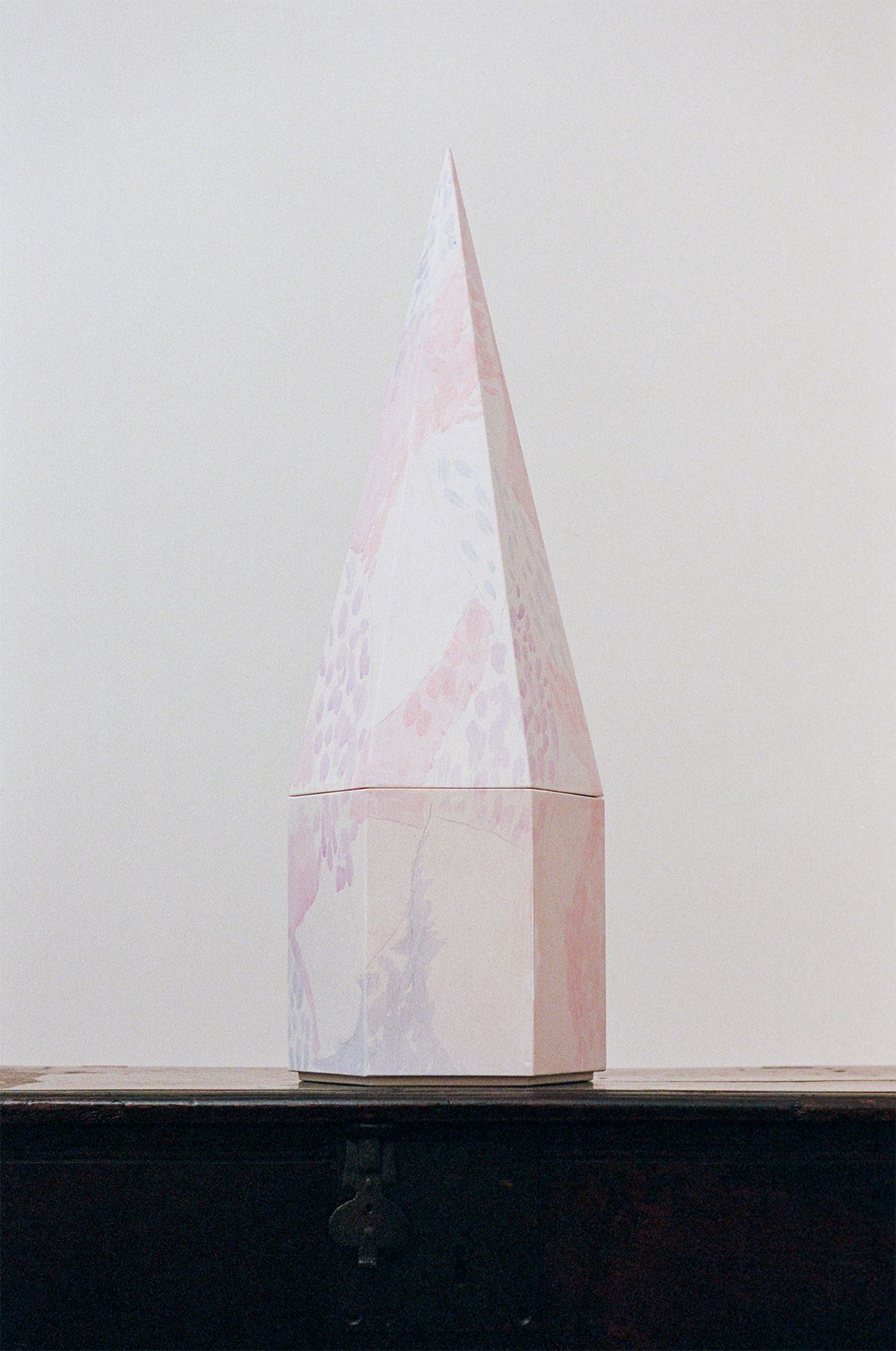
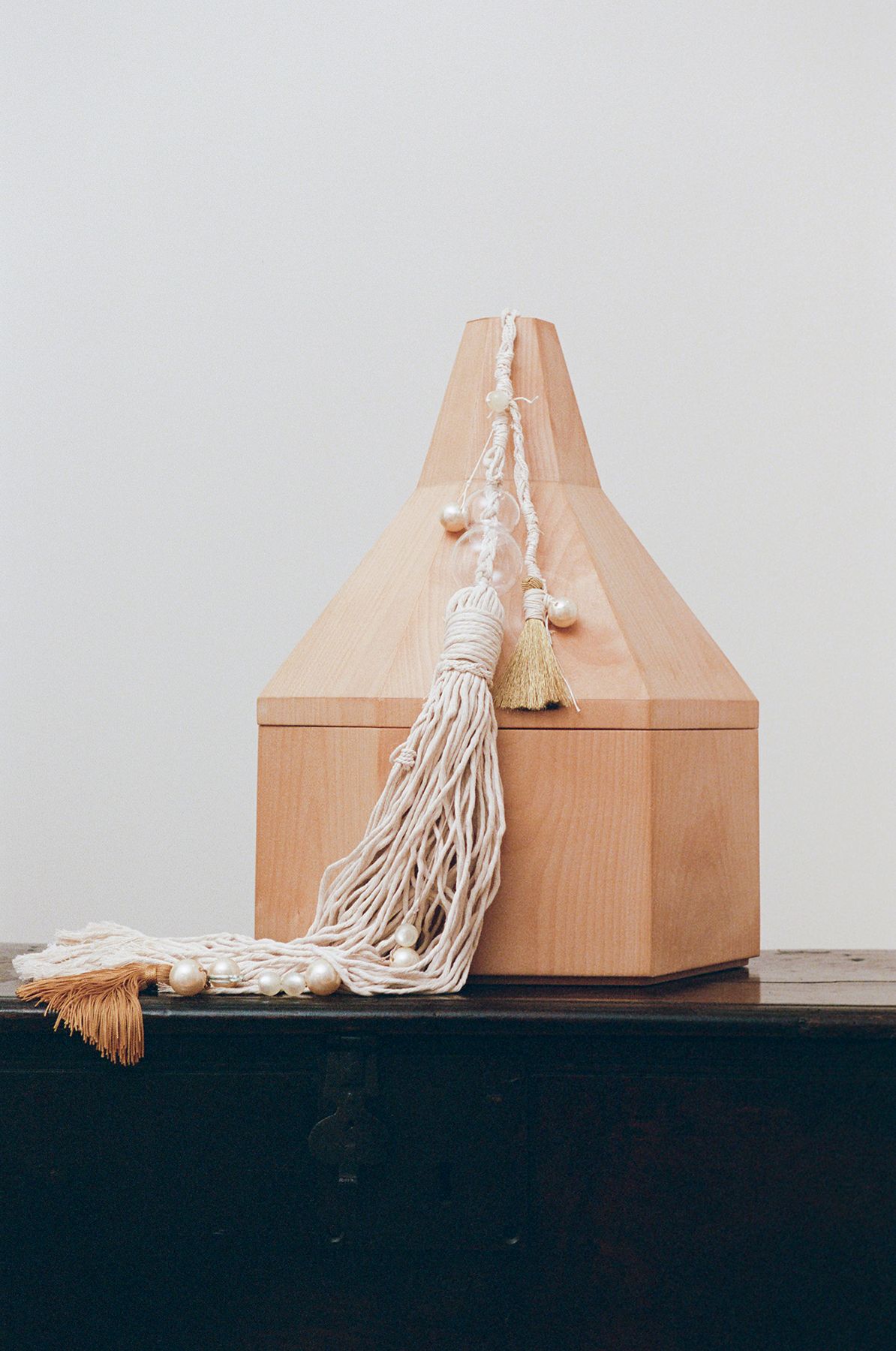
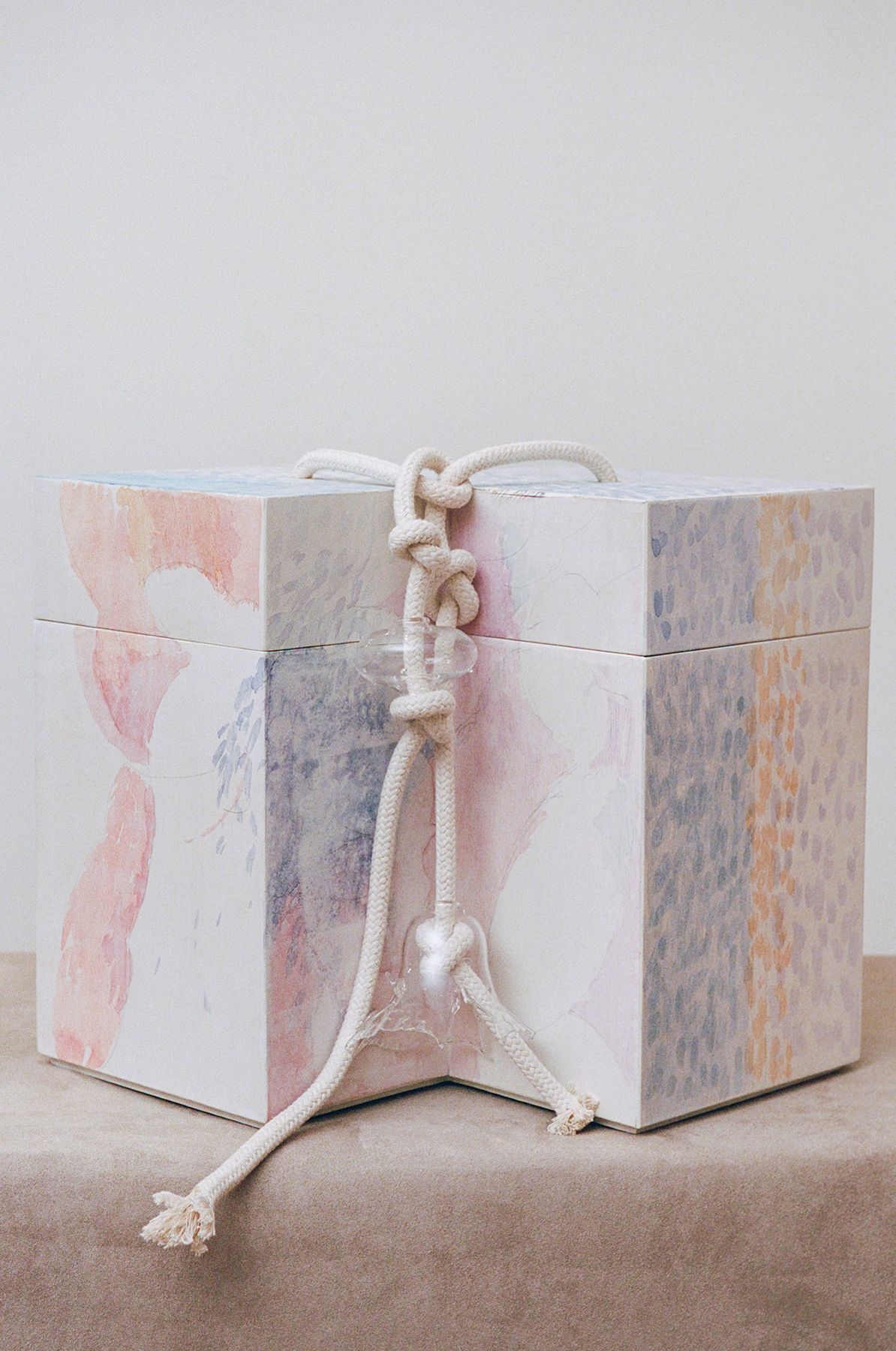
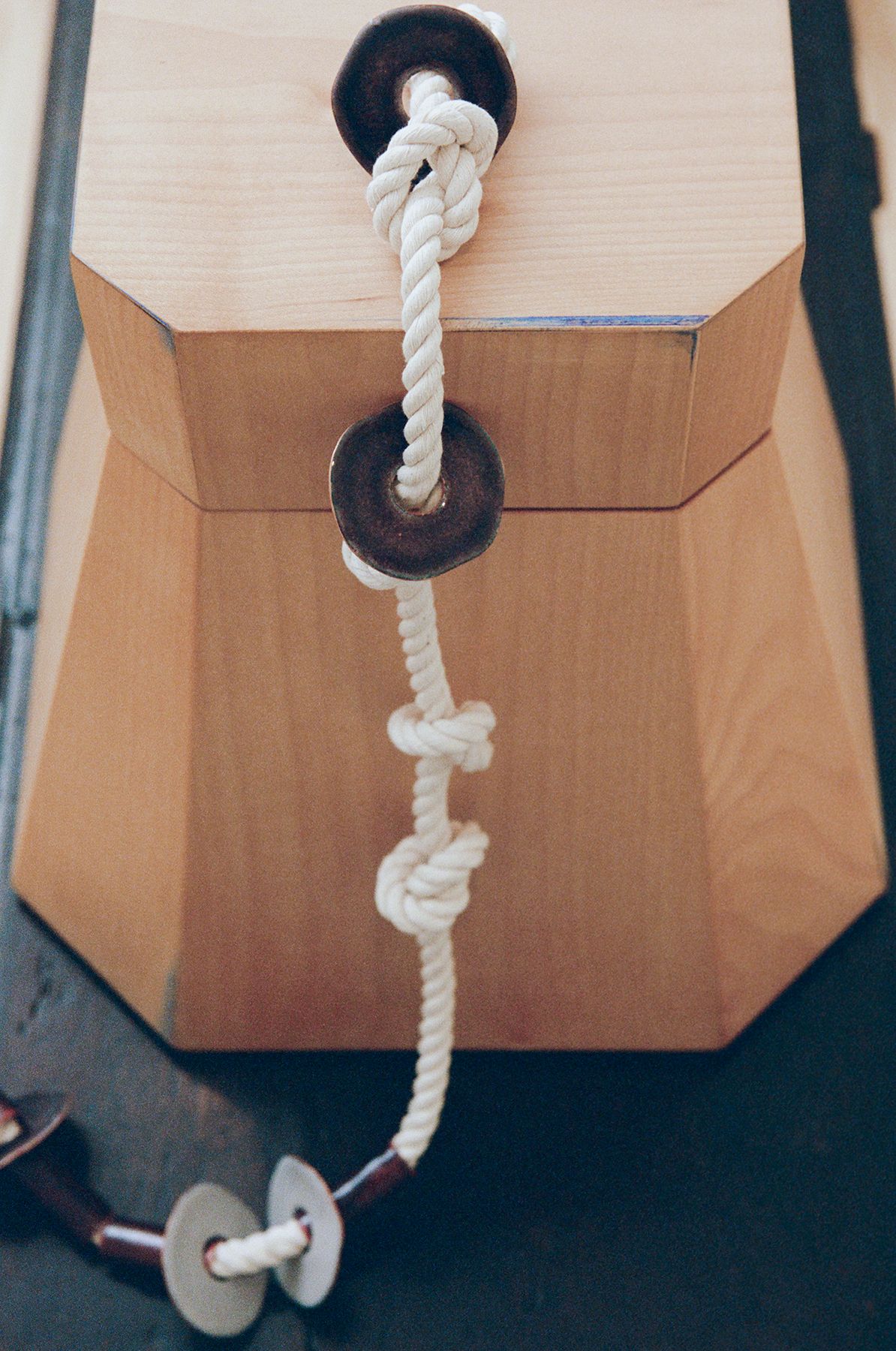
VC: For the boxes, I was inspired by my love of archival containers, which I like to consider as storage units. My concept was to create these weird shapes taken from hat boxes or architectural models and then paint on them to destroy that architectural gesture. The results remind me of textile pattern sketches. It was important to me that they were made incredibly well so they can age in a certain way. I always think of that scene in Titanic where the ship is flooding and all the objects from the cupboards start floating around. There is a sense of uselessness in what we’re doing that we have to accept. This is something I’m still struggling with. The copper boxes speak to the idea of always having a container to help manage things and organize your life, even if that notion may be a delusion. These boxes are inspired by things with an uncertain kind of stability like the Tin Man in the Wizard of Oz as well as marionette puppets. The process involves cooking pigment powders on copper, almost like a kind of bakery. You can’t really control the way the copper will react to the enamel and I really liked the idea of experimenting and pushing the process. I was lucky to find a supplier that could work at such a large scale because this process almost became a lost art. In the past, some artists and designers were using it with colors that contained lead, but eventually the technique was lost, only to be started again with improvisation and experimentation by the workshop I collaborated with. In working together, we had a great sense of communication, which allowed me to push them to embrace imperfection. Visible grains or stains on the pieces were things I really liked because it reminded me of mixing makeup. We’d watch video make up tutorials and videos from the BBC archive of people making powders for blush. Overall, it was an easy, collaborative conversation that resulted in a surprisingly smooth process.
EB: I hope to see these pieces in real life! It’s difficult for me to place them because they feel like such a unique material practice and process.
VC: You can find examples in architecture. This kind of enamel reacts only to copper, and the applications are limited as it is quite a difficult technique. As we created the pieces, even the shapes without the enamel were looking great. After the enameling process they remind me of this quality of love found in perfume or makeup boxes. They are like this, but on a larger scale.
EB: I love thinking about your practice as an exploration of the container in ways that are physical, psychological, and poetic. Your partnership with JSG feels invaluable in continuing this journey. It’s not just the space, but a very specific context with which your work can be exhibited in harmony and/or collision with the historic pieces.
VC: I’m really happy to continue working with Jacqueline and the team. It’s a very different spirit than I see elsewhere in Europe, or Italy especially. They made a great selection of hand painted, traditional pieces from America. It’s a language that is very unfamiliar to me, something that is very hard to find in Italy. And it really evokes a lot of things for me so I’m really happy about that. This is maybe the most fascinating thing for me about this show is the ability to create this dialogue between these objects in this context. That’s something I’m really happy about. I like this idea that there is a balance of the traditional with the new.
EB: So now that the pieces are in New York, is it the end of another creative chapter? Do you feel ready or energized to continue or is it time to take a break and return to you know, your other work?
VC: I think it will end when I’m actually in New York and I see the pieces in the context. Our work is so much about anticipation that the main thing for me is to engage and enjoy, especially because the process leading up to this was quick paced. When I’m there with the pieces, and see how they look together with the rest of the exhibition, this will be complete.
Then we see.